Our Story
Technology should reduce complexity, not add to it.
We are building better ways to work, and think, inside complex engineering systems.
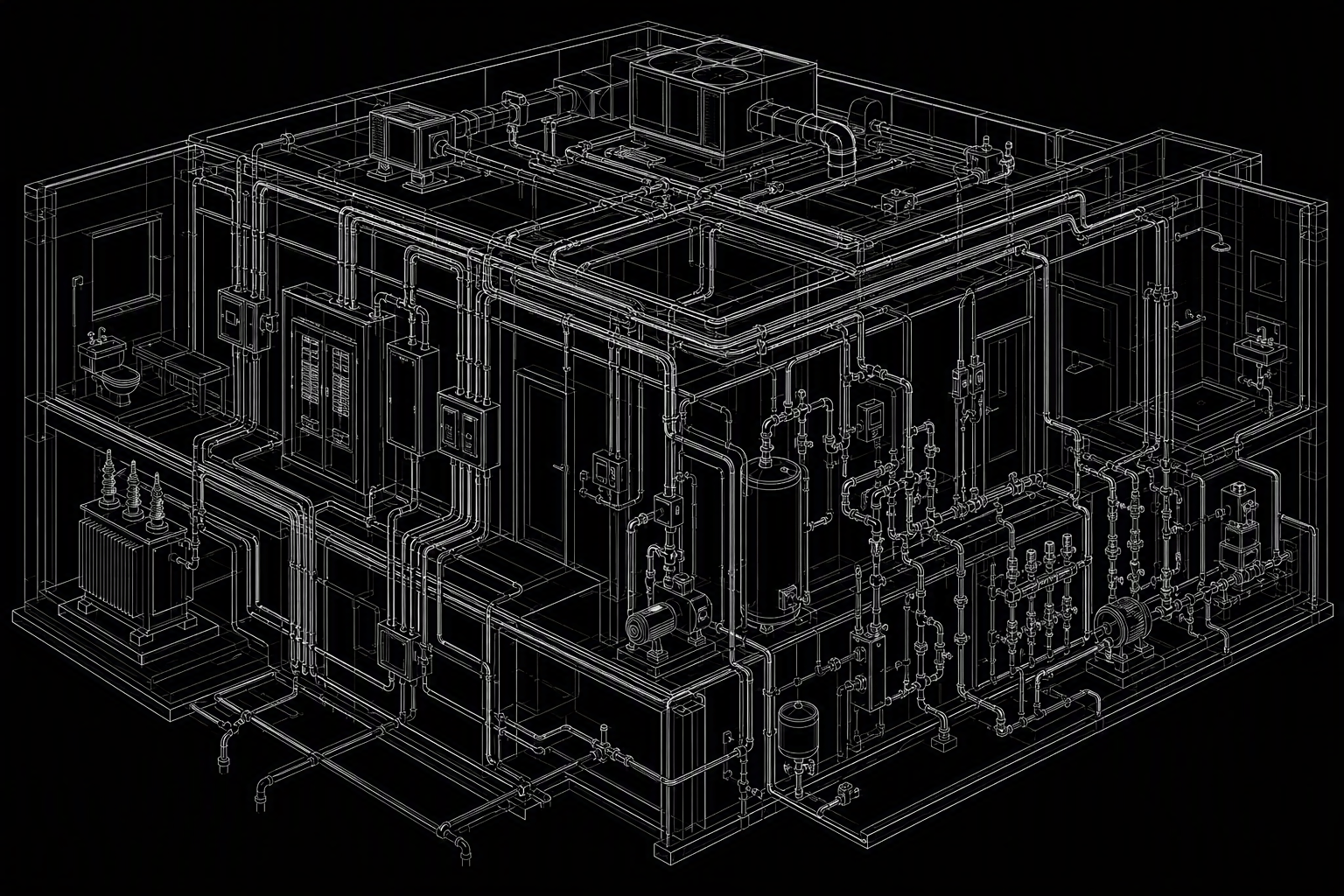
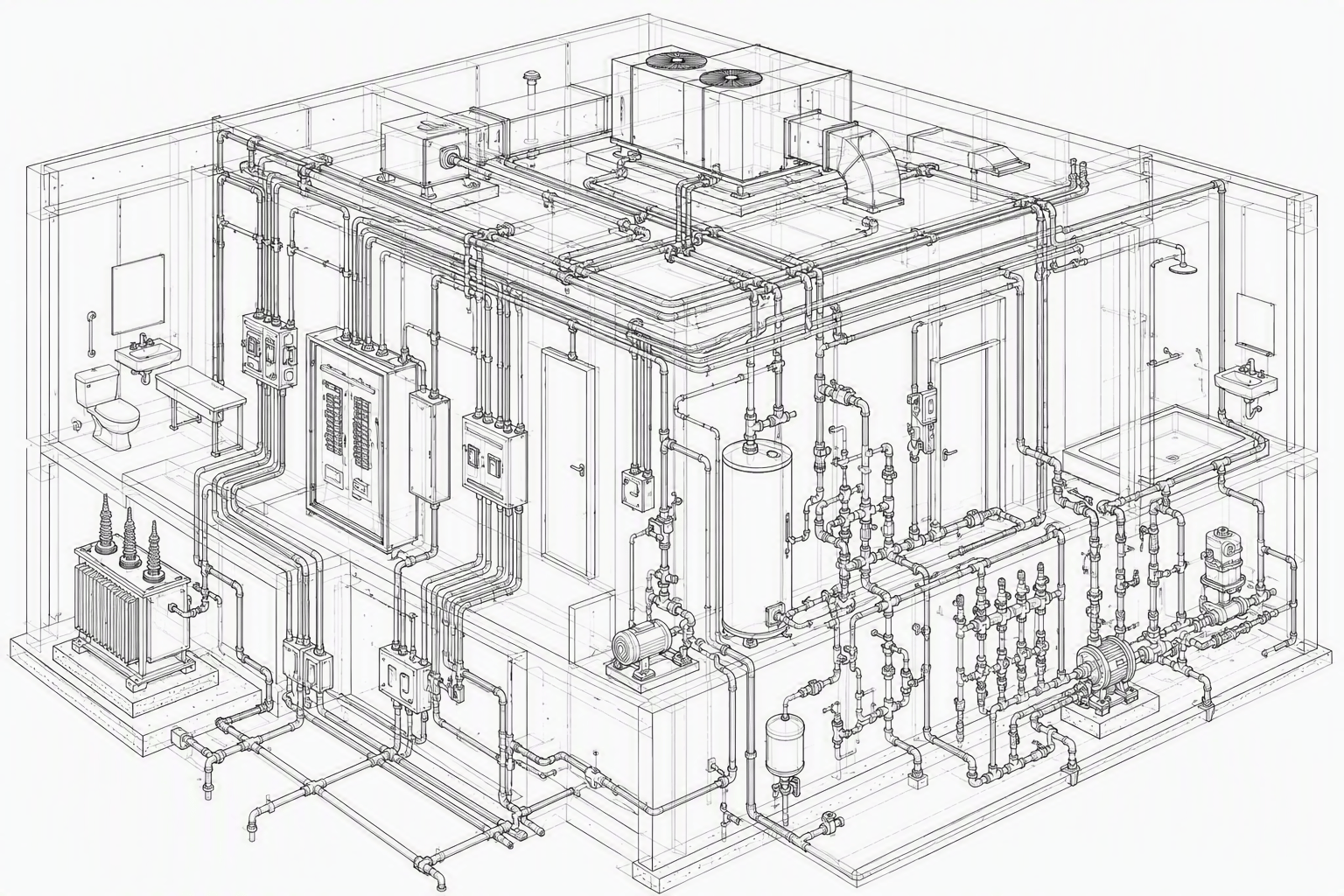
Artistic rendering of a complex physical system.
Elrod Technologies Group was created around a simple belief: technology should reduce complexity, not add to it.
That belief did not come from a whiteboard. It came from years spent inside the real machinery of engineering. The drawings, the schematics, the PDFs, the naming conventions, and the tribal knowledge that never quite makes it into a document. Anyone who has worked on complex systems knows the quiet truth of the field: the hardest part of engineering often is not the engineering. It is everything that surrounds it.
The Problem
Engineers spend their best energy on the wrong things.
Too much of the work is recall and retrieval. Reading scattered artifacts, interpreting conventions, and holding the whole picture in your head before a single decision gets made. It is slow, it is error prone, and that understanding walks out the door every time an experienced person does.
The human mind is not a filing cabinet. It is a creative engine, at its best when it is reasoning and designing, not memorizing and cross-referencing. The tools were supposed to help but too often just add more to track. So the burden falls back on people, who spend more time coordinating and searching than actually engineering.
We founded ETG to close that gap.
Our Approach
Let the system carry the load, so people can do the design.
We believe engineering tools should expose the underlying state of a system rather than force people to reconstruct it again and again from disconnected artifacts. That means building on a foundation you can trust: structured data, validation, and clear records of what changed and why.
On top of that foundation, we use modern intelligence to handle interpretation, ambiguity, and natural interaction. The point is not automation for its own sake. It is leverage. When the routine load is handled well, people are free to reason at a higher level, and every interaction with the system leaves them understanding it a little better than before.
We are not here to replace engineering judgment. We are here to remove the wasted effort that surrounds it, so the best minds in a room can spend their time designing instead of digging.
Intelligence
A structured model of an engineering system: its parts, how they connect, and the reasoning that keeps them consistent.
Who We Are
Engineers who felt the friction firsthand.
Our team brings together electrical, computer, and software engineering. People who have designed real power and control systems, and people who build the software and models that make those systems legible.
We have spent our careers convinced there was a better way to work, and we started ETG to build it.
What We Believe
Principles we build on.
We build from first principles. We reduce friction wherever we find it. And we design systems meant to make people sharper over time, not more dependent.
Reduce friction
Friction, not difficulty, is the real drain on engineering teams. We design it out on purpose.
Deterministic where it counts
Structured data, validation, and records you can trust. Intelligence assists, but reliability leads.
Built from first principles
We start from the problem, not the tooling, and design for essential complexity rather than accidental sprawl.
Leverage, not dependence
Good tools make people better at their craft. Understanding should grow, not stay locked in a few people's heads.
We are building better foundations for how engineering gets done.
And we are just getting started.